-
 play_arrow
Y WORLD Radio Station Y WORLD RADIO
music_note

TRC Cases Inquiry | Political interference, false allegations stalled apartheid-era prosecutions: Macadam
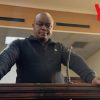
Former Deputy Director of Public Prosecutions, Advocate Chris Macadam, says political interference in apartheid-era prosecutions reached the highest levels of government, with senior police officials and government ministers allegedly obstructing the National Prosecuting Authority’s (NPA) efforts to pursue long-delayed cases.
Testifying at the TRC Cases Inquiry on Wednesday, Macadam detailed how political manoeuvring, missing dockets and attempts to impose executive control over prosecutions contributed to years of delays in cases involving apartheid-era crimes.
Macadam told the inquiry that former National Director of Public Prosecutions, Vusi Pikoli, reached a “dead end” in 2007 after facing resistance from former police commissioner, Jackie Selebi, the Department of Justice and the National Intelligence Agency.
Correspondence presented to the inquiry reportedly showed Selebi insisting that the NPA could not make decisions on TRC prosecutions without approval from a committee of Directors-General, a requirement Pikoli warned was unconstitutional.
Macadam supported Pikoli’s position, questioning why executive officials should have the power to determine whether prosecutions proceed.
“Look at the National Commissioner of Police. When he wrote to Advocate Pikoli in 2007, Advocate Nell and Mr. Leask was at an advanced stage of planning to arrest and prosecute him for serious corruption offenses. So what value are we going to attach to high-ranking officials with those serious issues hanging over their heads?”
The inquiry also heard that investigations into some of the country’s most prominent apartheid-era cases were effectively left without police investigators for years.
Task teams had been instructed in 2006 to appoint investigators for cases including the COSAS Four, the Cradock Four and the Pebco Three. However, Macadam testified that investigators were only assigned in 2010.
The inquiry further heard allegations that former Security Branch officers attempted to derail prosecutions by raising unsubstantiated claims linking former President Thabo Mbeki and other ANC leaders to criminal activity.
During cross-examination, human rights lawyer, Howard Varney, highlighted internal memorandums from 2006 which allegedly showed resistance within the police to prosecuting former Security Branch members.
Macadam confirmed that retired police officers working on contract had attempted to persuade prosecutors that prosecuting apartheid-era operatives would “contaminate” the country and could result in parallel prosecutions of ANC leaders.
“I remember specifically him saying, ‘The TRC was such a beautiful process. We can’t contaminate it, because the prosecution of former Security Branch members will lead to the prosecution of the President, and that will have a major negative impact.’ He said that specifically.”
The inquiry heard that former NDPP, Bulelani Ngcuka, eventually ordered the removal of roughly 400 TRC dockets from the NPA amid concerns that police leadership was using allegations against ANC figures to obstruct prosecutions.
Police were subsequently instructed to resubmit legitimate cases individually. Macadam told the inquiry that no such dockets were ever brought forward.
The evidence also pointed to alleged attempts by members of the executive to halt the prosecutions.
Macadam confirmed correspondence from former Justice Minister, Brigitte Mabandla, to Pikoli in February 2007, in which said she was “surprised” that the NPA was proceeding with TRC prosecutions.
He described the apparent resistance from government officials as extraordinary, particularly because formal task teams had already been established to fast-track the long-delayed investigations.
“I find it very strange to see how, if this is correct obviously… how the minister could be under such an impression when there has been this task team… and it was clearly the intention made clear that we need to move now on those investigations. So I find it extraordinary that such a view should be expressed.”
The evidence presented to the inquiry suggests that a combination of political interference, police obstruction and failures to assign investigators contributed to the premature closure or prolonged stalling of major apartheid-era murder investigations.
Written by: Lebohang Ndashe
Current show
Upcoming shows
Latest posts
LATEST NEWS
Esterhuizen to skipper Boks against Wallabies
Masemola’s charges withdrawn, top cop eyes reinstatement
Sibiya arrest raises questions over police succession and security concerns
TRC Cases Inquiry | Radebe pressed on stalled TRC prosecutions and fate of apartheid-era cases
Mogotsi’s fourth attempt at bail falls flat
SPOTLIGHT FEST