-
 play_arrow
Y WORLD Radio Station Y WORLD RADIO
music_note

Physics, architecture deepen doubts in Mabelane death narrative

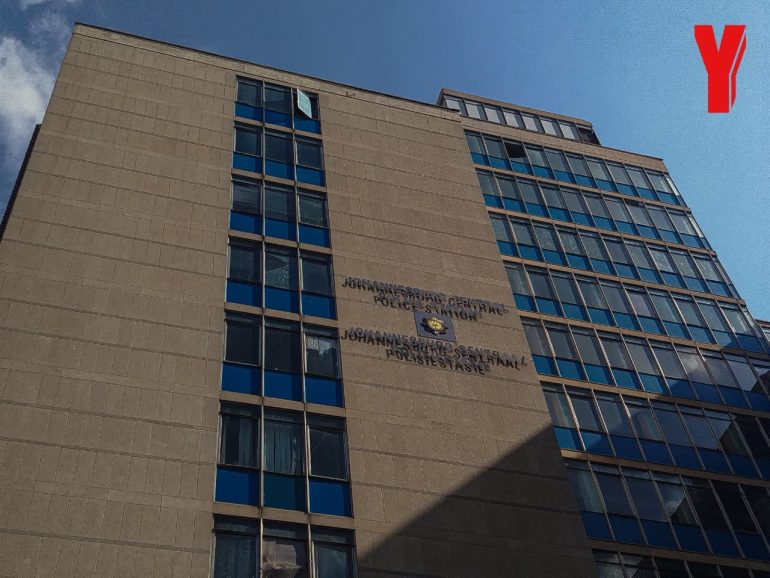
The reopened inquest into the death of anti-apartheid activist, Matthews “Mojo” Mabelane, is increasingly shifting from witness testimony to questions of physics and building design, as experts argue that the official account of a suicide fall from the 10th floor of the former police headquarters may not align with physical evidence.
At the Johannesburg High Court, both the State and the Mabelane family continue to challenge the apartheid-era finding that the 22-year-old died by suicide after allegedly falling from what is now Johannesburg Central Police Station, suggesting instead that he may have been pushed by Security Branch officials.
Court proceedings resumed on Tuesday afternoon after an in loco inspection of the tenth floor of the former John Vorster Square Police Station, including Room 1008, where Mabelane was interrogated before his death in 1977.
The court, legal teams, experts and family members walked through the narrow corridors, roof access points and window positions linked to the final moments before Mabelane allegedly fell and landed on a vehicle below.

Architect and forensic specialist, Dr Heather Dodd, told the court that the building’s design, particularly the narrow exterior ledge, pivot window system and spatial distance to the ground-level impact point, raises serious questions about how the fall occurred.
She also noted that movement along the ledge would have required navigating an extremely restricted surface, making rapid or sustained movement difficult.
-
 play_arrow
Physics, architecture deepen doubts in Mabelane death narrative | By X9 Converter
However, it was aeronautical engineer, Thivash Moodley’s, testimony that further shifted focus to the mechanics of the fall.
Moodley told the court that the way Mabelane’s body allegedly travelled through the air and landed is inconsistent with either a standard jump or accidental fall from a ten-storey building. He said human motion alone would not easily produce the horizontal distance and stable rotation described in witness accounts.
He compared the case to documented falls from taller buildings, arguing that bodies typically land much closer to the base unless significant external force is applied. Even a controlled jump, he added, would not easily produce the trajectory described in the evidence.
Moodley also criticised earlier reconstruction models, saying assumptions about walking speed on a narrow ledge had been incorrectly translated into outward momentum, something he described as physically unlikely without external force or a different mechanism.
He further argued that the building layout itself limits the possibility of certain actions being performed at speed or with force, given the restricted ledge and window positioning.
“For him to land at six metres away from the building, he must have been propelled by a force?.. Jumping, yes. A force that was either generated through the act of jumping, through the act of leaping, if you want to take the four metres into consideration, or an external force propelling him. Not simply by falling, slipping and falling, losing balance and falling,” Moodley added.
Moodley concluded that multiple scenarios – including a fall, a leap, or an external force – must all be weighed against the physical evidence, emphasising that the reconstruction remains open to interpretation but is increasingly difficult to reconcile with a suicide narrative based on momentum alone.
The inquest continues as the court weighs competing explanations, with architecture, physics and contested historical testimony now central to revisiting one of apartheid-era policing’s most disputed deaths.
Written by: Lebohang Ndashe


Current show
Upcoming shows
Latest posts
LATEST NEWS

Zungu accepts defeat, but still wants change

Senzo Meyiwa Trial | Cellphone records come under scrutiny

Ramaphosa calls for AI oversight as Trump insists US must win AI race
Matlala Trial | Fortuner tracking data under fire as defence challenges State’s case

Family confirms body found in Rhodesfield is missing runner Tsontso
SPOTLIGHT FEST