-
 play_arrow
Y WORLD Radio Station Y WORLD RADIO
music_note

Madlanga Commission | Shibiri denies careless sharing of sensitive police information

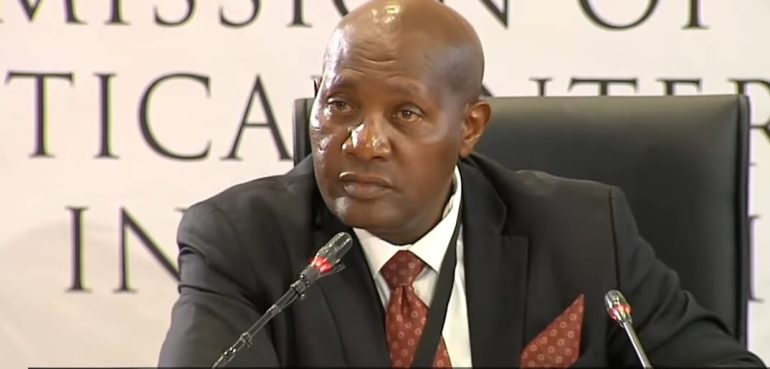
Suspended South African Police Service (SAPS) head of Organised Crime, Major General Richard Shibiri, has told the Madlanga Commission that his WhatsApp interactions with Sergeant Fannie Nkosi did not involve the improper sharing of privileged case information.
Several witnesses who have testified before the commission have implicated Shibiri in alleged wrongdoing, including claims that he offered bribes to police detectives to halt investigations and maintained links with suspected crime cartel figures.
Shibiri has also been accused of interfering in investigations related to the April 2024 assassination of Vereeniging Q-Tech engineer, Armand Swart.
Nkosi is known to the Madlanga Commission for his ties to suspended Deputy National Commissioner Shadrack Sibiya and Shibiri, both of whom maintain that their relationships with him were strictly professional.
Shibiri told the commission that his communication with Nkosi took place within the established command structure and reflected mentorship and professional guidance consistent with senior-subordinate engagement in SAPS.
He also addressed Nkosi’s testimony before the commission, in which Nkosi alleged that police information relating to controversial blogger Musa Khawula had been shared with alleged underworld figure and tenderpreneur Vusimuzi “Cat” Matlala.
Shibiri rejected this characterisation, saying the interaction arose after Matlala contacted him claiming he was being subjected to attempted extortion.
He said Matlala had forwarded him screenshots of the alleged communication with a journalist, adding that he received the information in September 2024 while travelling across provinces on official duties.
Shibiri further told the commission that references made by KwaZulu-Natal Police Commissioner, Nhlanhla Mkhwanazi, regarding his conduct must be viewed within the context of his long-standing operational policing responsibilities.
He said this included lawful engagement with investigative sources, command oversight of complex investigations and the institutional duty to combat organised crime.
Shibiri was implicated by previous witnesses who claimed he interfered in investigations relating to the April 2024 assassination of Vereeniging Q-Tech engineer Armand Swart.
He told the commission that during organised crime investigations, officers often engage with community members, registered informants and sometimes collect physical evidence from crime scenes to strengthen cases.
Shibiri maintained that he has always acted within the operational mandate of SAPS.
“Any interaction or knowledge contributed to me arose within my professional duties and operational mandate. I am presently on suspension arising from administration processes described here. The sequence of events demonstrate that this outcome did not occur in isolation but followed a progressive development of adverse perceptions concerning my role,” Shibiri said.
Shibiri also addressed remarks made by Mkhwanazi last year regarding a 2021 drug trafficking incident, which created the impression that members of the organised crime unit under his command were implicated.
He said at the time he was serving as Gauteng Deputy Commissioner.
Shibiri further warned that organised criminal syndicates have increasingly attempted to infiltrate law enforcement structures, describing it as an ongoing and evolving threat to institutional integrity.
He said such infiltration attempts have surfaced across several crimes including drug trafficking, taxi violence, gang-related crime, extortion, kidnapping for ransom and illegal mining.
Shibiri also acknowledged that in some cases law enforcement officials have leaked confidential operational information to criminals.
He added that such interference often leads to cases being struck off the roll or withdrawn, eroding public trust in the justice system.
Meanwhile, controversial North West businessman Brown Mogotsi, told the commission that severe diarrhea prevented him from appearing earlier on Monday.
Mogotsi had been summoned to explain his absence after previously citing medical reasons for failing to attend proceedings.
Commission chair Justice Mbuyiseli Madlanga expressed concern about witnesses failing to honour summonses and later providing explanations.
He also criticised the medical certificates previously submitted, saying many do not clearly outline the severity of the illness and therefore provide little assistance to the commission.
Mogotsi apologised to the commission and said he had been suffering from an upset stomach since returning from Cape Town.
“I really have to apologise and reiterate, commissioners, that I have been very consistent throughout the preparations all the time before the commission and since I came back from Cape Town on Friday I was not okay. I just had a lot of pressure; more like diarrhea; I was so sick and I am still not well, but I thought because it’s for the commission’s information throughout the engagement, it is me who suggested that day to the evidence leader. I really apologise but indeed I was ill,” Mogotsi said.
Justice Madlanga said Mogotsi’s medical certificate would be referred to the Health Professions Council of South Africa to verify its authenticity.
Mogotsi did not object and assured the commission he would attend future proceedings.
His testimony before the commission will be scheduled at a later stage.
Written by: Odirile Rabalao
Similar posts

Current show
Upcoming shows
Latest posts
LATEST NEWS

Gauteng urged to keep cool amid scorching heat

Pietersen wary of strong Cardiff outfit

Baby Nikita trial | Eldorado Park man accused of her killing blames drugs for his actions, seeks leniency
Revised White Paper on Local Government sparks division ahead of elections

YouthX by Nedbank Con Hill 21 November 26
SPOTLIGHT FEST