-
 play_arrow
Y WORLD Radio Station Y WORLD RADIO
music_note

TRC cases inquiry | Mbeki challenges NPA over failure to prosecute nearly 300 cases


Former President Thabo Mbeki has challenged the National Prosecuting Authority (NPA) to explain why it failed to investigate and prosecute nearly 300 cases referred to it by the Truth and Reconciliation Commission (TRC), insisting that his administration never obstructed the process.
Mbeki took the stand at the Khampepe Commission of Inquiry, where he denied allegations that secret talks with former apartheid-era security officials were aimed at shielding them from prosecution.
The former president denied allegations that he participated in secret talks with former apartheid-era security officials to reach an agreement shielding them from prosecution.
Mbeki told the Commission that no national executive had never taken a decision to obstruct the investigation and prosecution of TRC-related cases.
-
 play_arrow
TRC cases inquiry | Mbeki challenges NPA over failure to prosecute nearly 300 cases Nonhlanhla Harris
He said responsibility for investigating and prosecuting the cases rested with the NPA, which must account for why most had not been pursued.
Mbeki acknowledged that discussions took place with former senior members of the apartheid-era security forces, but maintained that the aim was to encourage greater participation by former political and security leaders in the TRC process.
He denied that any agreement was reached to prevent investigations or prosecutions.
-
play_arrow
TRC cases inquiry | Mbeki challenges NPA over failure to prosecute nearly 300 cases Nonhlanhla Harris
The former president also defended his April 2003 parliamentary address, in which he rejected general amnesty while discussing possible ways of dealing with politically motivated crimes that had not been processed by the TRC.
He said the proposals were intended to help establish the truth and advance national reconciliation, rather than suppress criminal investigations.
Mbeki also addressed the special dispensation for presidential pardons introduced during his administration. He said the presidential pardon process was constitutionally distinct from decisions to prosecute individuals who had not yet been convicted.
He noted that pardons granted in 2002 to people convicted of politically motivated offences drew criticism from, among others, the Helen Suzman Foundation and the late Archbishop, Emeritus Desmond Tutu, over concerns about transparency.
Mbeki denied that the subsequent pardon process was designed to provide an alternative form of amnesty for former security force members who had not received amnesty through the TRC.
-
play_arrow
TRC cases inquiry | Mbeki challenges NPA over failure to prosecute nearly 300 cases Nonhlanhla Harris
In his concluding remarks on Monday, Mbeki said the passage of time made it important for the Commission to establish the facts through reliable evidence rather than inference.
He said he remained confident that the NPA would not be able to produce credible evidence showing that the national executive had prevented it from fulfilling its constitutional and legal obligations.
Mbeki is expected to continue his testimony before the Commission on Wednesday.
@TRC_inquiry
Mbeki: Failure of NPA to prosecute TRC cases leaves one to deduce that perhaps the prosecution of apartheid-era perpetrators would testify and open “a can of worms” against former leaders of apartheid government.— TRC_inquiry (@TRC_inquiry) October 19, 2026
Written by: Lebohang Ndashe

Current show
Upcoming shows
Latest posts
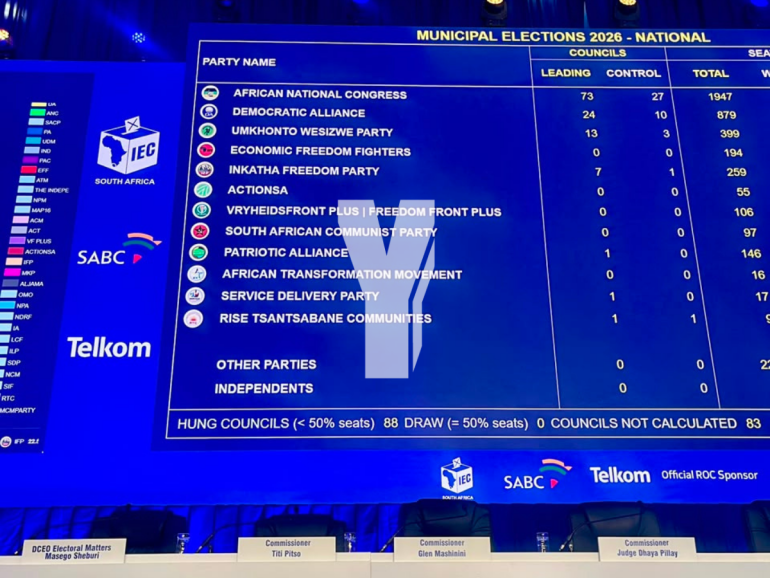
2026 Elections | Coalition fever grips parties as hung municipalities pile up

Tshwane’s water woes | Unsafe springs and critically low reservoirs
2026 Elections | Gauteng election results signal shifting fortunes as ANC acknowledges losses and IFP eyes gains
Russell Brand faces possible lengthy sentence after rape conviction
LATEST NEWS
2026 Elections | Coalition fever grips parties as hung municipalities pile up
Tshwane’s water woes | Unsafe springs and critically low reservoirs
2026 Elections | Gauteng election results signal shifting fortunes as ANC acknowledges losses and IFP eyes gains
Russell Brand faces possible lengthy sentence after rape conviction

Maumela’s multi-million-rand Ferrari set for auction
SPOTLIGHT FEST