-
 play_arrow
Y WORLD Radio Station Y WORLD RADIO
music_note

Madlanga Commission | Former Hawks officer says seized cocaine was never formally recorded


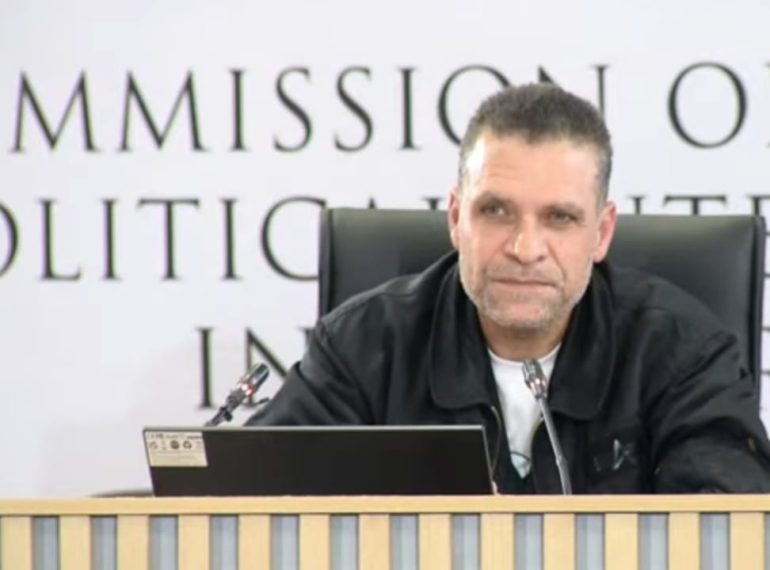
Former South African Police Service (SAPS) Directorate for Priority Crime Investigation (DPCI) Lieutenant-Colonel, Jakobus Prinsloo, says seized cocaine exhibits stored at the Port Shepstone Serious Organised Crime Investigations (SOCI) unit in June 2021 were never formally recorded.
Prinsloo testified before the Madlanga Commission on Thursday, saying national instruction require exhibits to be counted an recorded at a SAPS office, although he noted this is not always common practice.
He told the commission that Port Shepstone DPCI commander, Brigadier Msizi Campbell Nyuswa, and suspended KwaZulu Natal Hawks Head, Major-General Lesetja Senona, were present when officers stored the cocaine in the unit’s walk-in safe.
Prinsloo said he was instructed to empty the safe before the exhibits were placed inside.
He further testified that Warrant Officer, Livingstone Mpangase, was placed in charge of the cocaine under Nyuswa’s command.
According to Prinsloo, the drugs were never formally booked in because the DPCI office had reportedly been instructed not to store exhibits since 2017.
The former DPCI officer described the arrangement as highly risky, saying it created opportunities for untraceable theft.
He also raised concerns that the drugs were never physically counted, saying neither Senona, Nyuswa, nor Mpangase proposed that the the exhibits be formally verified.
Prinsloo said he was verbally informer that the shipment consisted of 541 kilograms of cocaine, which was later stolen during a burglary months afterwards.
He told the commission that Nyuswa informed him the cocaine would be stored in the Port Shepstone DPCI offices after being seized at the Durban Harbour, allegedly because the forensic laboratory did not enough secure storage space.
Prinsloo, who testified that he follows lawful instructions from his superiors without question, said he did not challenge the decision because he believed it was not his place to do so.
He further testified that Nyuswa insisted on taking both sets of keys to the walk-in safe after the exhibits were stored.
During earlier testimony, Hawks Head for SOCI Major-General, Hendrik Flynn, told the commission that the correct procedure would have been to book the exhibits at the nearest police station, before transferring them to a forensic laboratory for storage until the criminal case was finalised.
Prinsloo also revealed major security weaknesses at the Port Shepstone DPCI offices.
He testified that all employees accessed the two-storey building using a single universal code, with no system in place to track who entered the premises.
According to Prinsloo, the access code was only occasionally changed after a staff member left the service or following a break-in.
He added that the offices, located in a business district, had no surveillance cameras or alarm systems monitoring movement around the building.
Prinsloo also said the electrified perimeter fence became ineffective during load shedding.
Written by: Odirile Rabalao

Current show
Upcoming shows
Latest posts
LATEST NEWS

Wolvaardt rediscovers form as Proteas breeze past Zimbabwe

Madlanga Commission | JMPD kidnapping, extortion claims exposed

Matlala Trial | Kekana’s torture claims under scrutiny

Majodina apologises after vulgar outburst as ANC faces backlash

Millions spent on anti-illegal immigration protests, but not enough for GBV: Activist
SPOTLIGHT FEST