-
 play_arrow
Y WORLD Radio Station Y WORLD RADIO
music_note

Ramaphosa’s impeachment court battle could redefine how SA removes presidents – legal expert
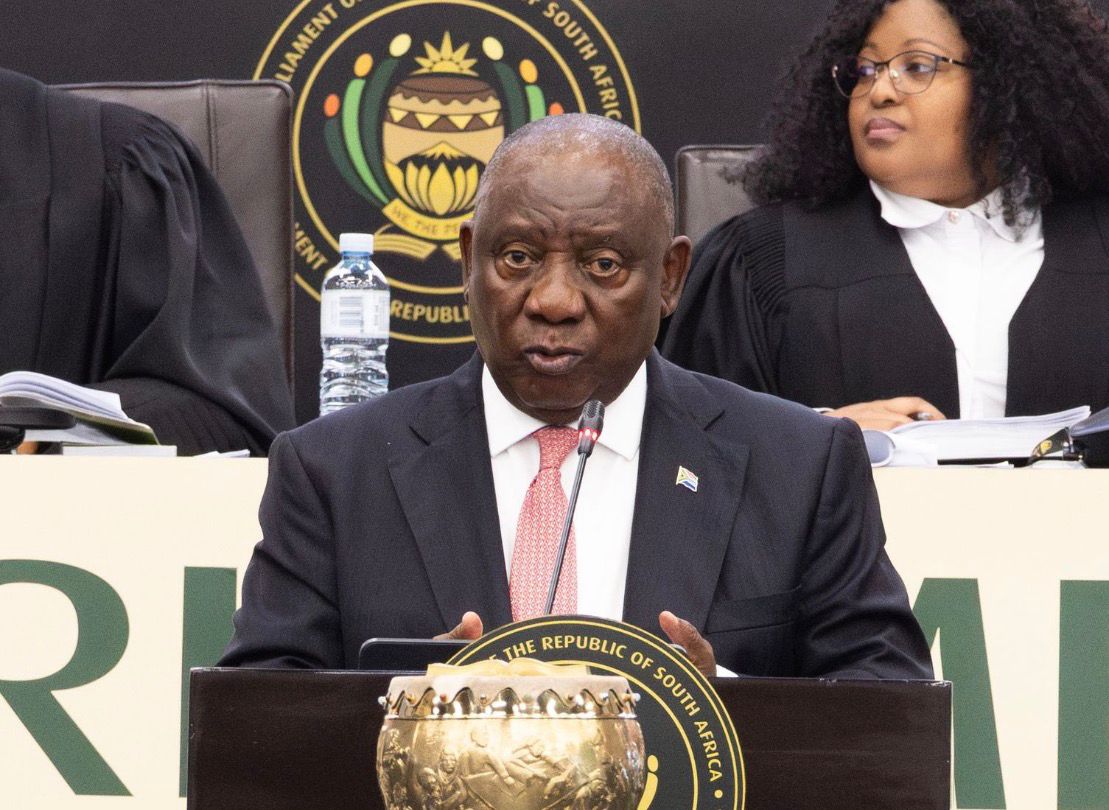
Legal expert, Leo Maphosa, says President Cyril Ramaphosa’s court bid to overturn Parliament’s Section 89 independent panel report is shaping up to be one of South Africa’s most significant constitutional battles since the Nkandla era.
His remarks come after Ramaphosa filed papers at the Western Cape High Court on Tuesday, seeking a review of the Phala Phala report and asking the court to declare it invalid.
The panel, led by former Chief Justice Sandile Ngcobo, found that there was prima facie evidence that Ramaphosa may have breached his constitutional oath in connection with the 2020 theft of millions of dollars at his Phala Phala farm in Limpopo.
Its report is expected to be considered by a 31-member parliamentary impeachment committee, following a Constitutional Court ruling that Parliament’s 2022 to reject the panel’s findings was unconstitutional and unlawful.
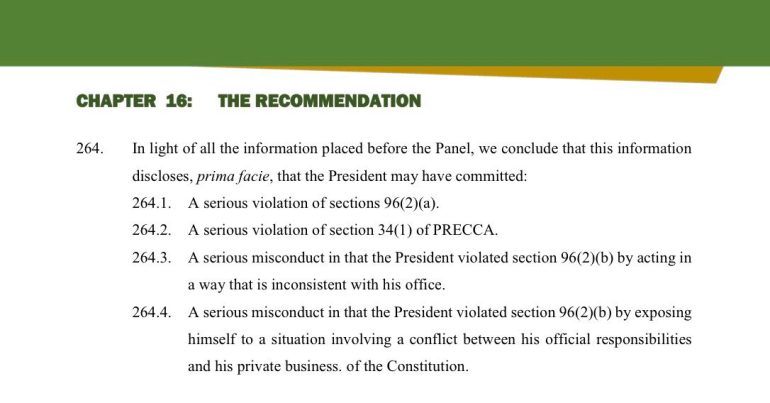
However, in his application, Ramaphosa’s legal team argues that the panel misunderstood and exceeded its constitutional mandate, contending that it wrongly concluded there was prima facie evidence against the President.
They also argue that the panel applied an incorrect legal standard, misunderstood Section 89 of the Constitution, relied on insufficient and unreliable evidence, and exceeded its preliminary role.
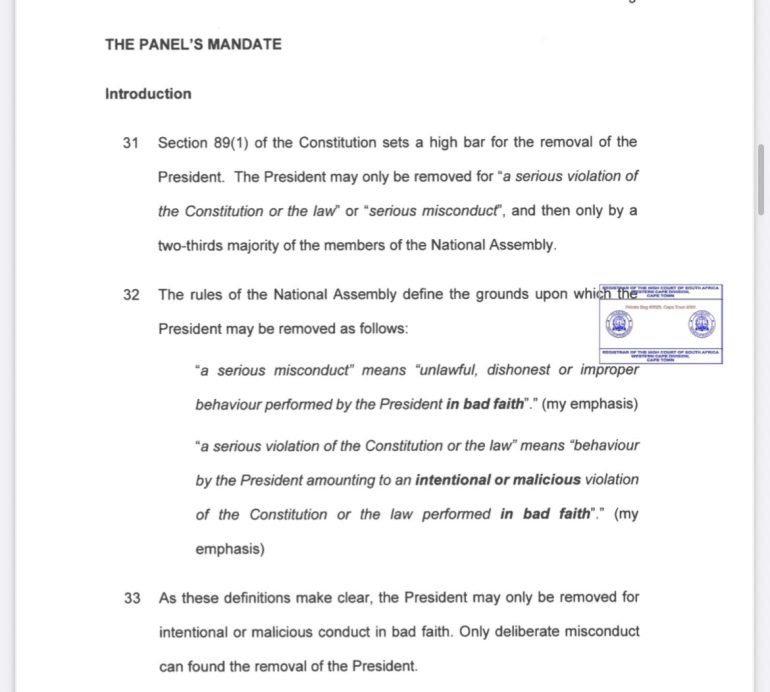
Maphosa says the panel’s use of the “prima facie” standard, effectively finding that the President has a “case to answer to”, is constitutionally significant.
“The independent panel was never intended to conduct a trial. It had no subpoena powers and no ability to make final credibility findings. Its function was therefore largely preliminary to assess whether sufficient evidence existed to justify parliament moving into a full impeachment inquiry, and probably that is the strongest argument in defence of the panel. It was not deciding whether Ramaphosa was guilty. It was deciding whether the allegations were serious enough to warrant deeper constitutional scrutiny,” he said.
-
 play_arrow
Ramaphosa’s impeachment court battle could redefine how SA removes presidents – legal expert Realeboga Nke
Maphosa added that the outcome could redefine how future presidents are held accountable.
He says Ramaphosa’s challenge also raises a key constitutional question, whether impeachment proceedings can be triggered by suspicion alone.
“The President’s papers argue that the panel blurred the distinction between information and admissible evidence, relied heavily on hearsay and inferential material, and at times appeared to reason from unresolved suspicion rather than objective facts,” said Maphosa.
Maphosa says both sides of the argument are backed by constitutional principles.
If the court rules in Ramaphosa’s favour, Maphosa says the panel’s report could be reviewed and set aside, forcing Parliament to reconsider the matter under a corrected legal standard.
However, he stressed that such a ruling would not clear the President of wrongdoing.
“It would simply mean the process used to trigger impeachment-related proceedings was constitutionally defective.”
He says if Ramaphosa loses the case, Parliament’s impeachment process is expected to gain fresh momentum.
“The next likely step would be the continuation of the parliamentary impeachment inquiry through the relevant committee structures,” he explained.
He added that unlike the independent panel, an impeachment committee has powers to call witnesses, test evidence and make substantive findings on whether the president committed a serious constitutional violation.
“Only the National Assembly can remove the president, and only with a two-thirds majority. That threshold remains extraordinarily high both legally and politically,” he added.
While the court case does not automatically halt Parliament’s impeachment process, Maphosa warned it could create constitutional uncertainty.
The EFF’s Statement on Cyril Ramaphosa’s Decision to Proceed with Judicial Review Application Against Section 89 Phala Phala Report
-The EFF further expects the Speaker of the National Assembly, Ms Thoko Didiza, to oppose the review application by the President of the Republic… pic.twitter.com/Z5jP7dZcad
— Economic Freedom Fighters (@EFFSouthAfrica) May 11, 2026
The Elderly Statesman Thabo Mbeki is basically saying what many people have been saying from day one 😭
If Cyril Ramaphosa himself says he’s a businessman, owns cattle and buffalo, and the Phala Phala farm is his private business… then why did the @MYANC turn Parliament into… pic.twitter.com/6o2C3T83mG
— In A Nutshell🥜 (@Markosonke1) May 24, 2026
Similar posts


Current show
Upcoming shows
Latest posts
LATEST NEWS

Gauteng urged to keep cool amid scorching heat

Pietersen wary of strong Cardiff outfit

Baby Nikita trial | Eldorado Park man accused of her killing blames drugs for his actions, seeks leniency
Revised White Paper on Local Government sparks division ahead of elections

YouthX by Nedbank Con Hill 21 November 26
SPOTLIGHT FEST