Informal traders in Marabastad, Tshwane, who are facing possible eviction, are calling on the city to develop a contingency plan to help them sustain their livelihoods.
Thomas Hlabangwane, who has operated his traditional clothing business in the informal market since 2010, says the income he earns supports his family.
Hlabangwane, who says he is too old to start over, believes the city should take their financial hardships into account and offer support before forcing them out of Marabastad.
“I support my grandchildren and children, and I also pay for social clubs which I am part of with the money I make in my business. So now when they want to evict us, how are we going to survive? I cannot start over when I have already come this far in my business and I am also old. This is not fair at all,” says Hlabangwane.
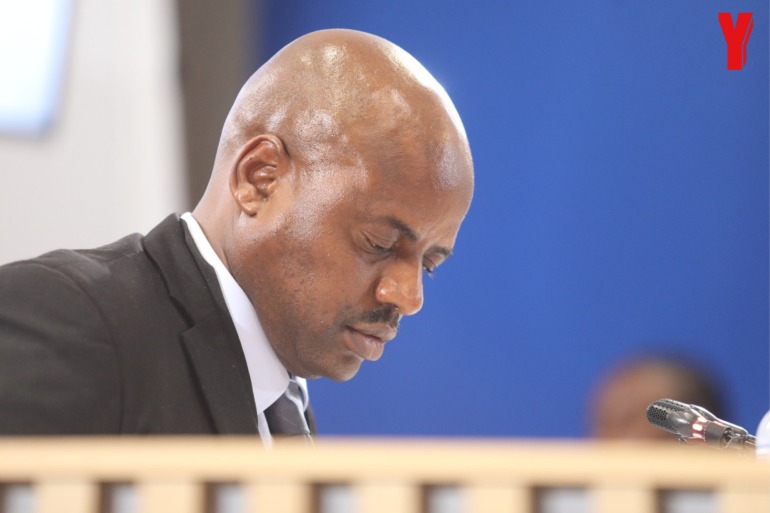
Tshwane Executive Mayor, Dr. Nasiphi Moya says the city is planning to transform the largely informal trading sector into a structured commercial hub for Small, Medium, and Micro Enterprises (SMMEs), as part of an effort to boost municipal revenue.
Yesterday, city officials launched one of its many infrastructure crackdowns, inspecting hijacked buildings in the Central Business District (CBD).
Dr. Moya says the city is also preparing a clean-up operation in Marabastad, claiming it is too chaotic.
She says it would be transformed into a manufacturing precinct for SMMEs as part of Tshwane’s economic revitalisation strategy.
She emphasised that these robust operations are intended to prevent potential safety hazards and to pave the way for the restoration of rundown buildings for future residential and commercial use.
Meanwhile, some individuals working in illegally occupied buildings in the CBD say they have turned to these spaces out of desperation, using them as a last resort to earn a living and provide for their families.
Abrahm Lepulane, one of the employees currently stationed in one of the illegally occupied buildings, claims to have been there for three decades.
He manages a funeral home, which specialises in manufacturing coffins and giving funeral services to low-income families.
Although business is not thriving, he says the parlour was the only place that offered him an opportunity to earn money.
“Money is scarce. We are just working here so that we don’t just stay still without doing anything. We are working so that we can support ourselves through any job we can secure,” says Lepulane.
Other illegal occupants of the city’s dilapidated and abandoned buildings say the privacy they find there is a crucial part of why they choose to stay.
One homeless citizen, who spoke on condition of anonymity, shared that he previously stayed at a non-governmental organisation shelter, where residents slept in a large hall filled with bunk beds. He later moved into one of Tshwane’s hijacked buildings.
He says, the fact that he could have refuge and solitude at no cost is what led him to stay in the hijacked building.
“Specifically because it’s Winter now, the hijacked buildings provide some warmth. It’s also a shelter unlike just being in an open space like a park. It feels more like an intimate space than just lying on a floor outside. It also provides us with privacy, we feel like we are in our own space here,” says the homeless man.
He says he has been homeless within the capital city for about two years now, saying disputes with his family in KZN is what drove him to where he currently finds himself.
He says he recycles bottles and cans to make ends meet, saying job seeking has been quite a challenge for him.
Some of the buildings in question contain illegally constructed shacks, which are primarily occupied by foreign nationals and members of the city’s homeless population.
Meanwhile, Tlangi Mogale, the Member of the Mayoral Committee (MMC) responsible for Tshwane’s inner city, stated that the city plans to relocate occupants of hijacked buildings to designated shelters.
“So they do actually form part of the indigent program of the city. Unfortunately we do not have a scouting team to go around and look for them. What we always advise is that they come to us as we have homes and NGOs that we are in partnership with which are willing to house homeless people and they do get a subsidy of some sort to help with housing indigent South Africans and legal immigrants,” says Mogale.
The hijacked buildings will be demolished before the city converts them into residential and commercial spaces.
Written by Odirile Rabalao
 play_arrow