-
 play_arrow
Y WORLD Radio Station Y WORLD RADIO
music_note

Madlanga Commission | SA institutions fight crime in silos as criminal networks operate as one: Kieswetter
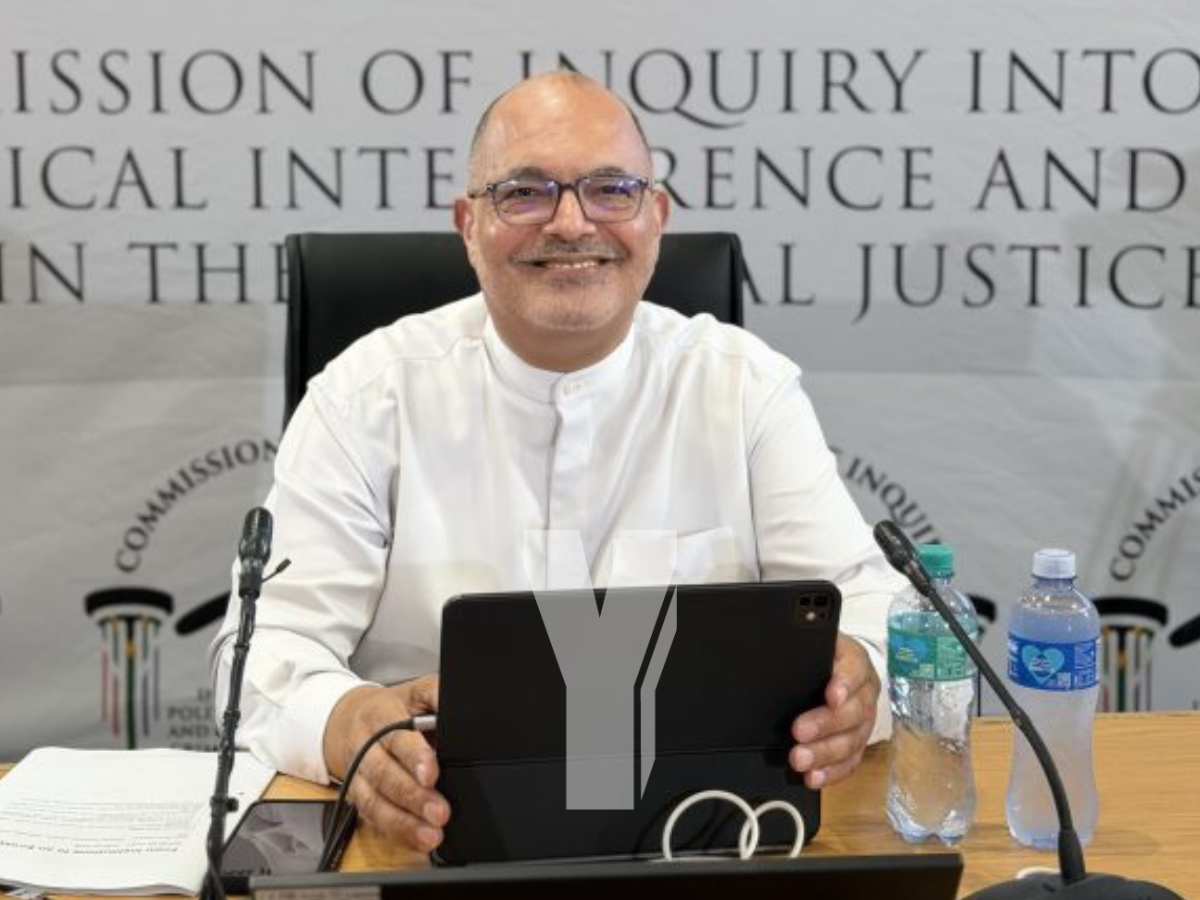
Former South African Revenue Services (SARS) Commissioner, Edward Kieswetter, says South Africa’s institutions may be individually effective, but their fragmented operations are undermining the country’s ability to tackle deeply entrenched misconduct and criminality.
Kieswetter, who led SARS from 2019 until his departure on 30 April 2026, now chairs the Police Advisory Panel. He was appointed by Acting Police Minister, Firoz Cachalia, to help steer reforms within the South African Police Service (SAPS) and advise on implementing the commission’s recommendations.
Testifying at the Madlanga Commission of Inquiry on Wednesday, Kieswetter argued that fixing individual institutions would not be enough to if the country failed to understand how they were organised and how they should function collectively.
The commission resumed public hearings following a two-day private session with Crime Intelligence boss Lieutenant-General, Dumisani Khumalo.
Kieswetter said South Africa has a rich ecosystem of institutions but lacked institutional ecosystems, leaving state agencies operating in isolation rather than as a coordinated force.
He warned that without addressing these structural shortcomings, even the most respected institutions would struggle to confront deeply embedded criminality, with their responses remaining largely transactional.
While stressing that institutional independence must be protected, Kieswetter called for organisational arrangements that would allow different institutions to leverage their respective mandates towards a common objective.
-
 play_arrow
Madlanga Commission | SA institutions fight crime in silos as criminal networks operate as one: Kieswetter Odirile Rabolao
He questioned whether state institutions could remain independent while collectively enforcing the law and confronting the forces undermining society.
Kieswetter outlined several underlying factors preventing government institutions from functioning effectively as a collective.
These include overlapping mandates, unclear lines of responsibility and a lack of coordination when different agencies encounter the same criminal networks.
He said institutions often failed to see the bigger picture, making it difficult to dismantle criminal operations in their entirety.
“Agencies cannot draw a picture. They cannot see the network and so no one can disrupt it entirely. We each may be tinkering on a different path of the same phenomenon but none of us even know that we are touching the same phenomenon because there is no collaboration,” Kieswetter said.
He pointed to the establishment of the Fusion Centre as a previous attempt to bridge the coordination gap, although he believes it has not been sufficient.
Kieswetter explained that the Fusion Centre was established within the criminal justice system to facilitate collaboration and information-sharing between different law enforcement agencies.
-
play_arrow
Madlanga Commission | SA institutions fight crime in silos as criminal networks operate as one: Kieswetter Odirile Rabolao
He said the center was jointly established by the South African Police Service (SAPS), the South African National Defence Force (SANDF) and the Department of Justice and Constitutional Development.
The former SARS commissioner also raised alarm over allegations emerging at the Madlanga Commission, saying the evidence presented so far points to possible infiltration of the country’s criminal justice system.
Although some of the evidence has yet to be tested, he said the recurring patterns were concerning.
Kieswetter commended the commission for connecting the dots across institutions that had previously operated without a formal understanding of how their activities intersected.
He says several institutions are mandated to tackle different parts of the same criminal network, yet continue to function separately rather than as one coordinated ecosystem.
“The causes that I have so far covered is in more detail in my written submission. There is no shared records of a case, there is no real institutional collaboration despite the fact that the Fusion Center encouraged collaboration. I’ve spoken about the incentives that perversely encourage silent behaviours and independence at this point is a function of an incumbent rather than the institutions themselves,” Kieswetter said.
He said the real battle within the criminal justice system appeared to be between the State and criminal networks.
Although this contest is not openly declared, Kieswetter argued that both sides were pursuing similar objectives, including competing for resources.
His central warning was that while criminal networks appeared to operate as a connected force, the institutions tasked with dismantling them were still fighting in silos.


Current show
Upcoming shows
Latest posts
LATEST NEWS

Tshwane Council | Moya retains mayoral chains as ANC claims Speaker’s seat

EFF accuses Zille of using Sibiya allegations to undermine Malema’s political standing

Durban gets the nod to host Soweto Derby CKO final

All eyes on Nhlanhla Mkhwanazi after Cabinet backs Hawks appointment

SAPS urges vigilance as Black Friday shopping frenzy gathers momentum
SPOTLIGHT FEST