-
 play_arrow
Y WORLD Radio Channel Y WORLD RADIO
-
 play_arrow
Void Transmission #04 Chloe Nguyen
music_note

Unions fear tariff hikes, job cuts amid Eskom restructure
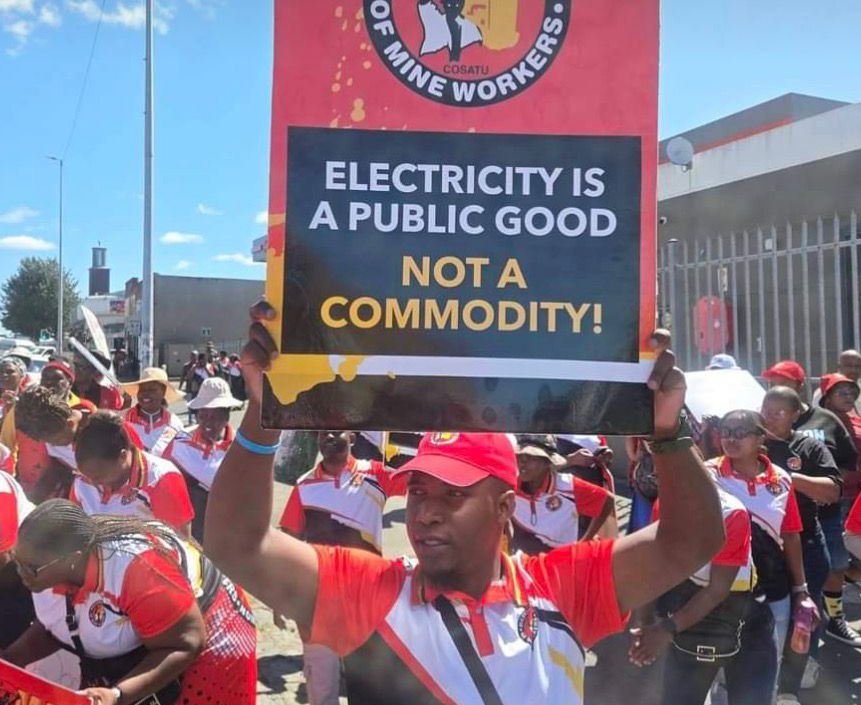

President Cyril Ramaphosa is facing mounting pressure from various labour organisations following his announcement of the establishment of an independent Transmission System Operator (TSO) as part of Eskom’s restructuring.
During the State of the Nation Address, Ramaphosa confirmed plans to create a fully independent state-owned transmission entity that will own and control the country’s electricity grid and oversee the operation of the power market.
The broader unbundling strategy will see Eskom divided into separate generation, transmission, distribution and renewable energy entities.
However, the proposal has drawn sharp criticism from labour federations, which argue that the move could pave the way for the privatisation of key state assets.
The Congress of the South African Trade Unions (COSATU) said it stands in solidarity with its affiliate, the National Union of Mineworkers (NUM), which has launched a mass mobilisation campaign against the restructuring.
COSATU spokesperson, Zanele Sabela, warns that separating Eskom’s assets could weaken the utility’s financial sustainability and place thousands of jobs at risk.
She says the creation of an independent transmission entity could strip Eskom of its most valuable assets while exposing the electricity sector to increased private control.
-
 play_arrow
Unions fear tariff hikes, job cuts amid Eskom restructure Nonhlanhla Harris
NUM has echoed similar concerns, describing the restructuring plan as a policy that could accelerate Eskom’s decline and open the door to large-scale privatisation.
“This policy of separating Eskom into multiple entities (Generation, Transmission, and Distribution) is a neo-liberal project designed to dismantle a vital state asset and facilitate the wholesale privatisation of South Africa’s energy sector,” the union stressed.
Both organisations have begun a series of regional marches aimed at pressuring government to halt the process.
Demonstrations have already taken place in the Eastern Cape and are expected to continue in the Free State and KwaZulu-Natal.
The unions are also calling for urgent engagement with government, warning that the unbundling could lead to further job losses and higher electricity tariffs if not carefully managed.
#COSATU Free State pledges solidarity with the National Union of Mineworkers and workers demanding the a halt on unbundling of @Eskom_SA #Eskom as part of ensuring that the national electricity utility remains in the hands of the state @LesediFM @qwaqwafm @SABCNews @Newzroom405 pic.twitter.com/tN8PgQPvH7
— @COSATU Today (@_cosatu) March 13, 2026
Meanwhile, Eskom has expressed support for the task team tasked with establishing the new transmission entity.
Update on the establishment of the independent Transmission System Operator (TSO) pic.twitter.com/tHDkkpXCP3
— Eskom Hld SOC Ltd (@Eskom_SA) February 13, 2026
Government maintains that restructuring the power utility is necessary to stabilise the energy sector, improve efficiency and attract investment in the national grid.
However, labour groups and some members of the public remain concerned that the plan could have serious implications for workers and the long-term sustainability of South Africa’s electricity supply.
The Chairperson once said…. pic.twitter.com/MBzKvutDrT
— Constitution First 🇿🇦 (@Constitution_94) February 13, 2026
Mbeki sold Sasol and Telkom.
Ramaphosa is selling Eskom.— Sika (@osmaseko) February 14, 2026
Written by: Realeboga Nke
Similar posts


Current show
Upcoming shows
Latest posts
LATEST NEWS